TSCM & Bug Sweeping Services Across Europe
Bureau Securitas provides technical surveillance countermeasures (TSCM): professional bug sweeps that find listening devices, hidden cameras and GPS trackers in boardrooms, hotel suites, residences, vehicles, aircraft and yachts. Our operational headquarters are in Lisbon. Our TSCM team is mostly stationed in London because of ongoing contracts there, and deploys to other locations by arrangement. Team availability, travel and access are confirmed for each assignment.
Please contact us from outside any space you believe may be compromised.
What is TSCM?
TSCM (technical surveillance countermeasures) is the professional detection of covert surveillance: listening devices, hidden cameras, GPS trackers, compromised telephone and network lines, and rogue wireless equipment. A TSCM sweep, often called a bug sweep, uses specialist detection equipment and a methodical physical search to establish whether a space is clear, and to document and preserve anything that is found.
Surveillance devices are cheap, small and easy to hide, and the people most likely to be targeted are those whose conversations carry commercial, legal or personal value. Most organisations commission a sweep around a specific moment: a transaction, litigation, a senior departure, a board meeting, a delegation visit or an office move. See when to get a bug sweep for the eight moments that most often justify one.
What we sweep
Every environment has its own concealment points and its own people with access. Our sweeps are planned around both.
Offices & boardrooms
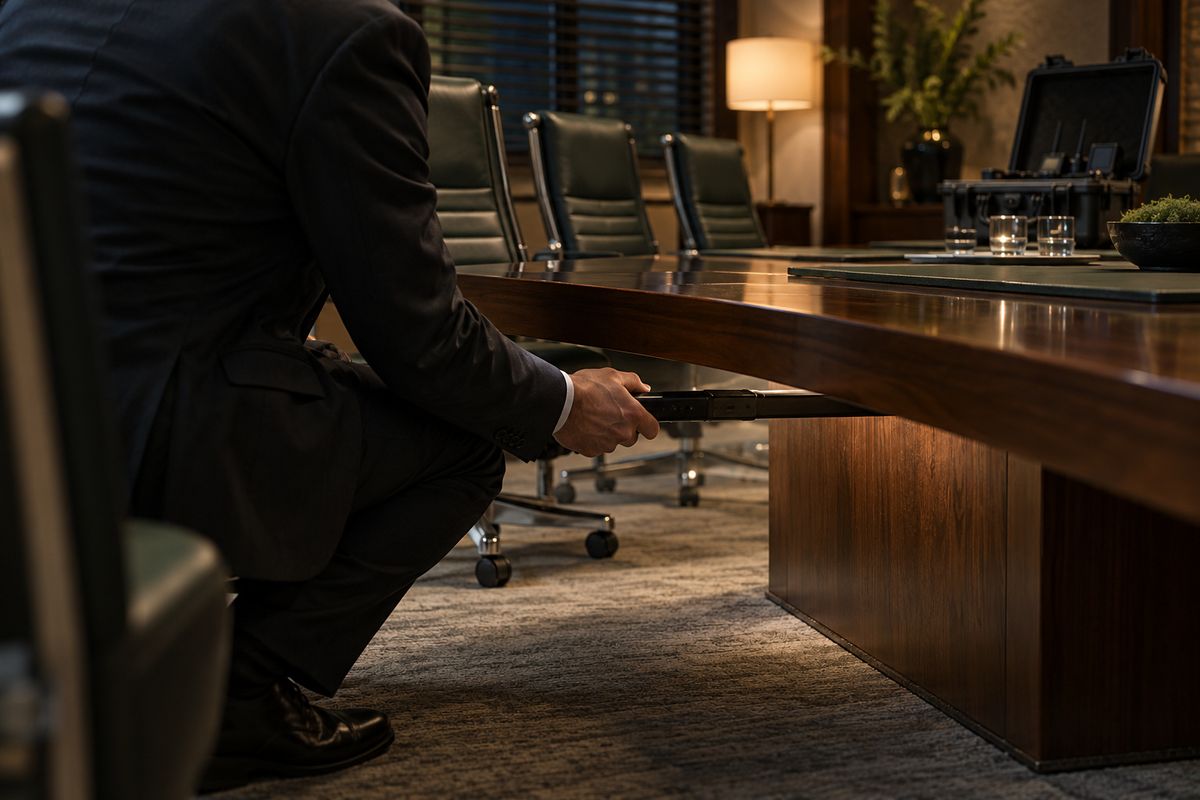
Boardrooms, executive offices and meeting rooms hold the conversations that matter most: strategy, transactions, litigation and personnel decisions. We inspect furniture, fittings, ceiling voids and floor boxes, desk and AV equipment, telephone and network points, and anything that has arrived recently. Sweeps are usually carried out out of hours, before a key meeting or as part of a regular schedule.
Office & boardroom sweeps →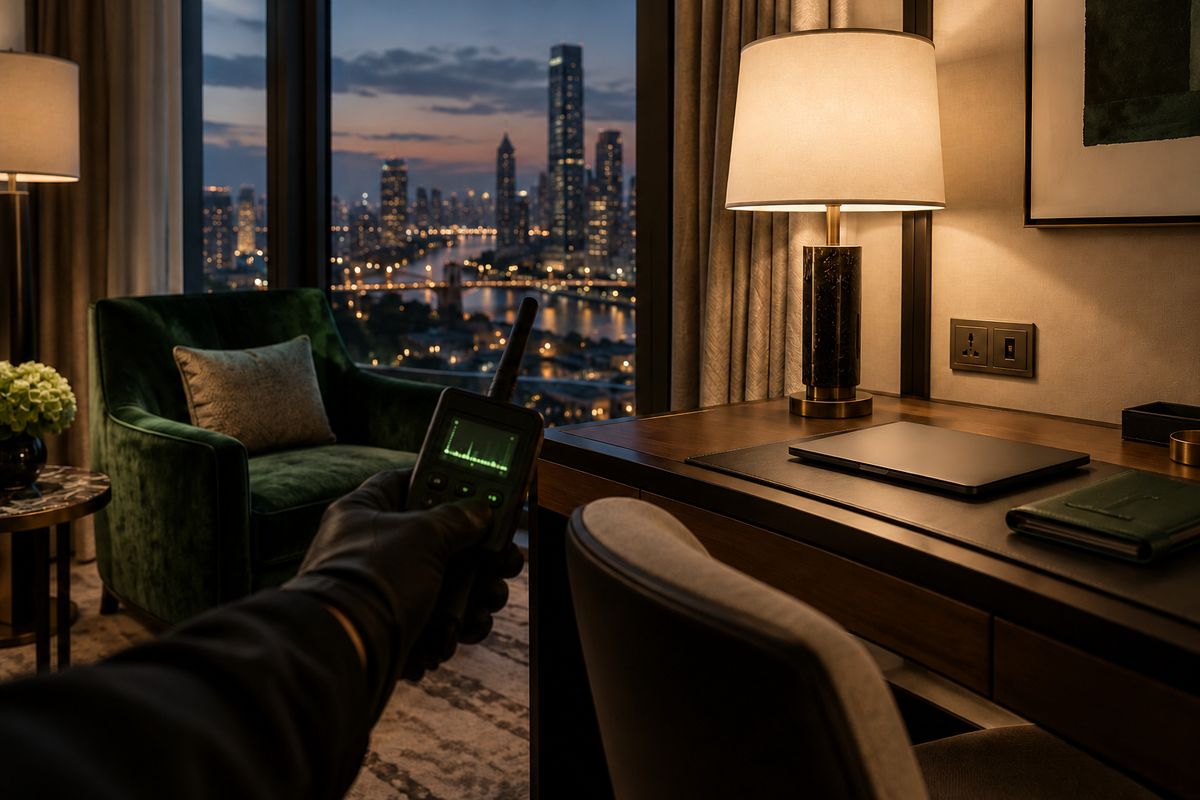
Hotel suites & meeting rooms
A hotel suite is where senior people take private calls and leave papers overnight, in a room many others can enter. We sweep suites, adjoining rooms and hotel meeting rooms on the day of arrival, after the room is allocated and before the principal enters, then advise on keeping access controlled for the rest of the stay.
Hotel suite sweeps →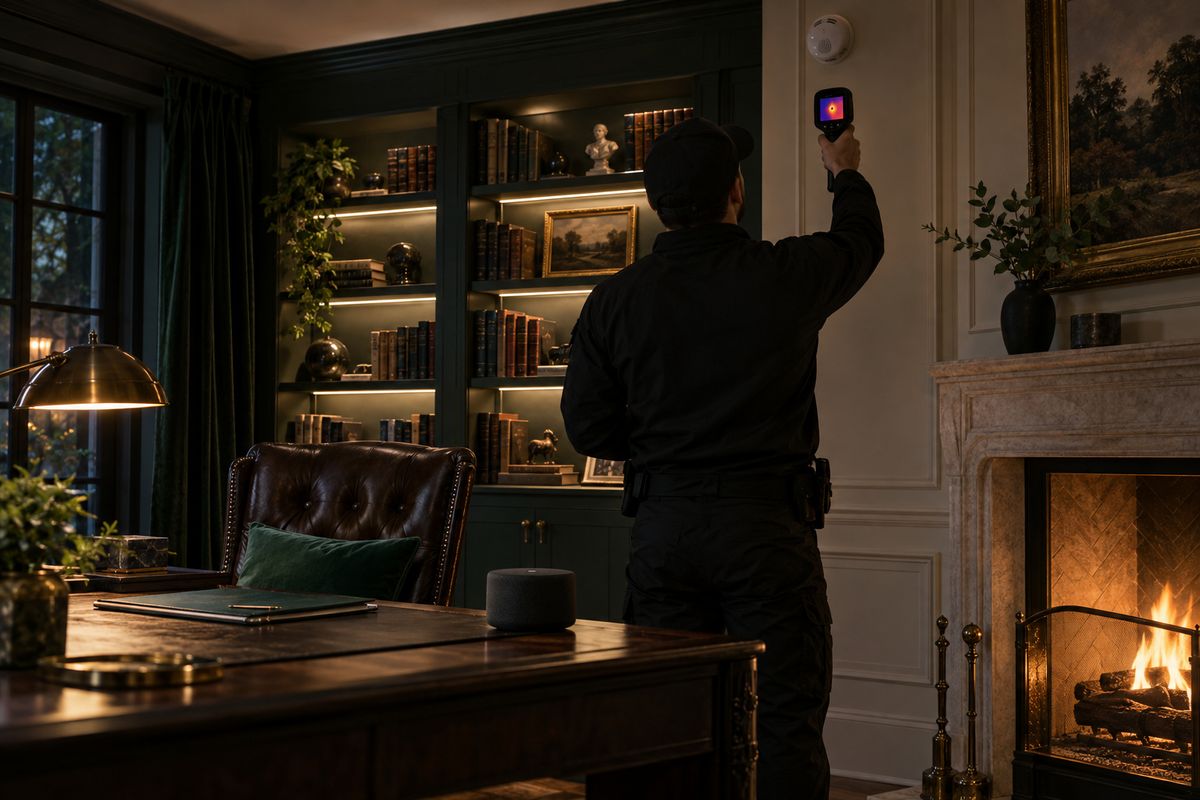
Private residences
Homes are swept during disputes, family-office transitions, after building works or staff changes, and for high-profile individuals. Coverage includes living areas, studies and home offices, staff areas, outbuildings, smart-home devices and the network. Work is planned around the household and carried out discreetly.
Residential sweeps →
Vehicles & GPS trackers
Vehicles are checked for GPS/GSM trackers and audio devices, whether magnetic units in wheel arches and under the chassis, devices wired into the loom or OBD port, or items hidden in the cabin. Vehicle checks are usually combined with a premises sweep, and a found tracker is documented and preserved, not simply removed.
Vehicle & GPS tracker checks →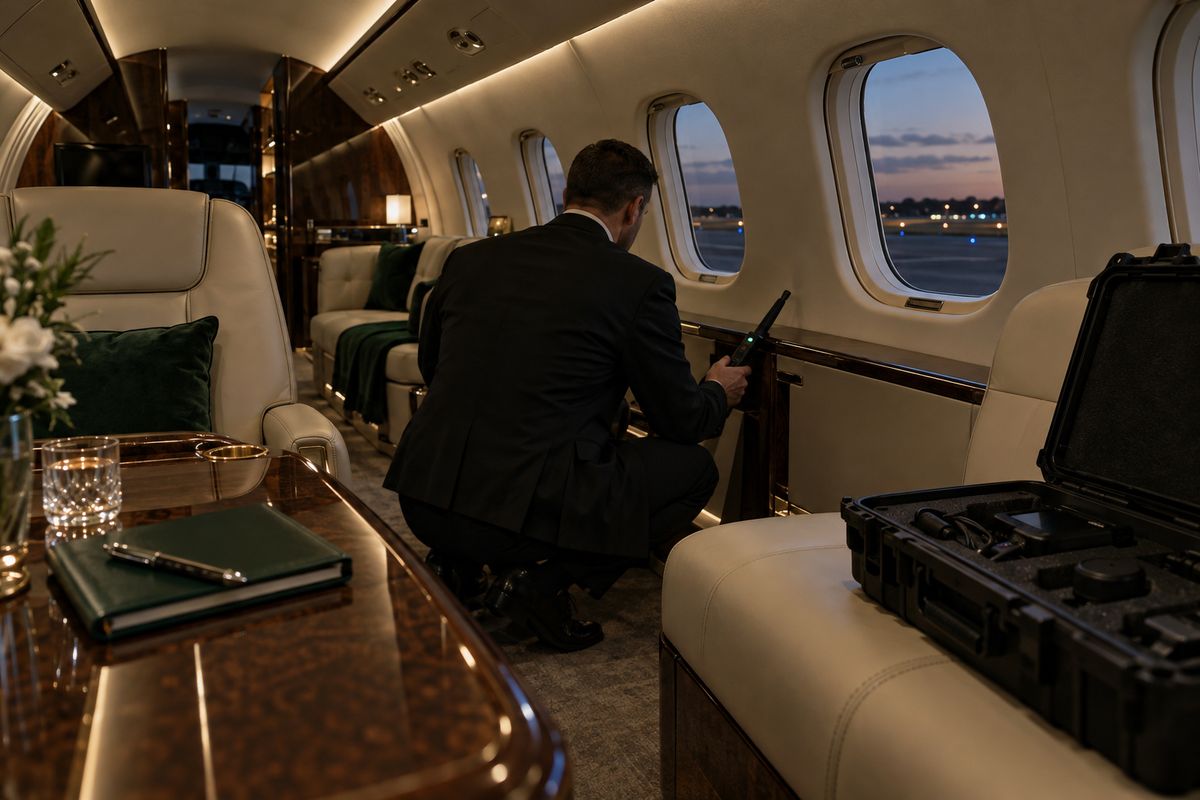
Aircraft & yachts
Private jets and yachts combine sensitive conversations with crews, contractors and maintenance providers who all need access. We sweep cabins, galleys, crew areas and onboard systems airside or dockside, coordinating with the operator, FBO or marina so the inspection fits around departure schedules.
Aircraft & yacht sweeps →
Recurring corporate programmes
Organisations that handle market-sensitive information often move from one-off sweeps to a programme: a quarterly baseline of the boardroom and executive floor, plus sweeps before price-sensitive meetings, transactions and after building works. A programme gives you a documented record of each room's normal state, and is priced below the same number of one-off sweeps.
Corporate programmes →Our method
A professional sweep layers several detection techniques so that no single concealment method defeats it.
RF spectrum analysis
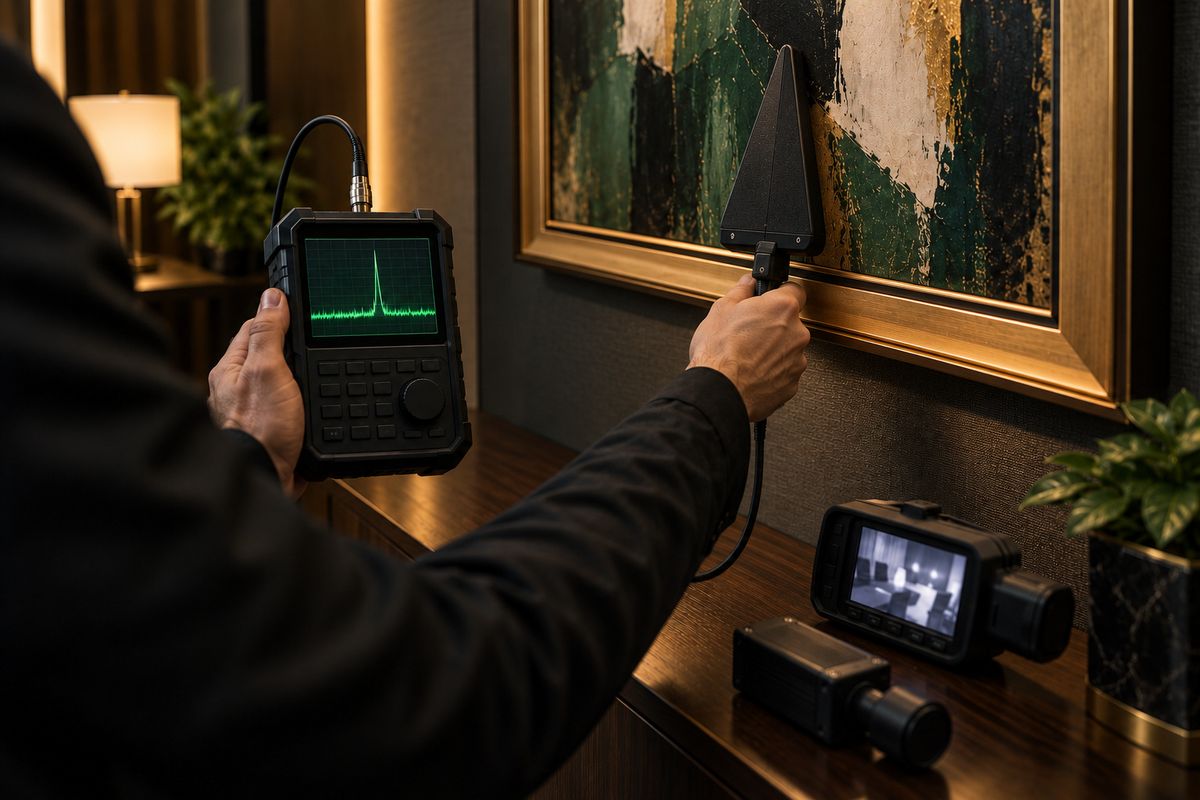
Wideband analysis from 10 kHz to 24 GHz to find transmitting devices, including short bursts and cellular uplinks, compared against the local radio environment.
Non-linear junction detection
An NLJD finds semiconductor electronics whether they are powered, transmitting or switched off, which is how dormant recorders and call-activated devices are found.
Thermal imaging
Thermal cameras show heat from hidden electronics inside walls, furniture, fittings and equipment that look ordinary to the eye.
Physical search
A methodical, hands-on inspection of fixtures, furniture, ceiling voids, sockets and equipment, including opening and comparing suspect items against known-good ones.
Telephone & line analysis
Testing of telephone systems, cabling and network points for taps, modifications and devices drawing power or data from the lines.
Wi-Fi & wireless
Detection of rogue access points, hidden cameras, Bluetooth and Wi-Fi devices on or near the network, and lens detection for optical devices.
Why phone apps and RF-only checks are not enough: they only detect a device transmitting at that moment. Recorders, dormant devices and cellular bugs that wake when called are designed to pass exactly that kind of check.
Who carries out the work
Our technical leadership includes Mike Moran, whose biography describes more than 25 years of intelligence, surveillance and counter-surveillance experience, and Paul Chauveau, an REI and cellular systems specialist. Read their professional backgrounds. The proposed inspection team, relevant qualifications and scope are confirmed for each assignment.

How an engagement works
From first contact to written report, the process is designed to protect confidentiality at every step. You deal with the same small team throughout, and nothing is shared beyond the people who need to know.

Contact us from a safe location and device. A non-disclosure agreement is available on request before any details of the site or the concern are discussed.
A short, confidential call to understand the premises, vehicles or travel involved, the timing and what has prompted the request.
You receive a fixed written quote covering team, days on site, travel and the report. No work is committed before you approve it.
A two-person team carries out the inspection, usually out of hours, using the full method above. Any finding is documented and preserved in place.
A verbal debrief on completion, followed by a written report suitable for legal, insurance or board purposes, with recommendations for keeping the area secure.
Urgent concern? If you think a room or vehicle is compromised now, do not discuss it inside that space and do not contact us from a device or network there. Read what to do if you find a device.
What a sweep costs
Professional TSCM work is priced by the team-day, because time on site depends on what is in a room as much as its size. Every engagement is confirmed with a fixed written quotation.
Travel and expenses are charged in addition. For what drives the price and how to judge a quote, read how much a bug sweep costs.
Who engages us
Corporate boards and executive teams ahead of transactions, results and sensitive negotiations; law firms protecting privileged discussions during litigation and arbitration; family offices and private clients during disputes, succession and travel; and government bodies and delegations visiting European capitals. We never publish client names.
Where we operate
Browse the 28 existing city guides below. Our operational headquarters are in Lisbon. Our TSCM team is mostly stationed in London because of ongoing contracts there, and deploys to other locations by arrangement. Team availability, travel and access are confirmed for each assignment. Each assignment needs an agreed scope, travel plan and property access. The city guides describe service coverage rather than permanent local teams.
UK & Ireland
France & Benelux
- Bug Sweeping & TSCMParisFrance→
- Bug Sweeping & TSCMBrusselsBelgium→
- Bug Sweeping & TSCMAmsterdamNetherlands→
- Bug Sweeping & TSCMLuxembourg CityLuxembourg→
Germany & Austria
Nordics
- Bug Sweeping & TSCMStockholmSweden→
- Bug Sweeping & TSCMCopenhagenDenmark→
- Bug Sweeping & TSCMHelsinkiFinland→
Southern Europe
- Bug Sweeping & TSCMMadridSpain→
- Bug Sweeping & TSCMLisbonPortugal→
- Bug Sweeping & TSCMRomeItaly→
- Bug Sweeping & TSCMAthensGreece→
Central & Eastern Europe
- Bug Sweeping & TSCMWarsawPoland→
- Bug Sweeping & TSCMPragueCzech Republic→
- Bug Sweeping & TSCMBudapestHungary→
- Bug Sweeping & TSCMBratislavaSlovakia→
- Bug Sweeping & TSCMLjubljanaSlovenia→
- Bug Sweeping & TSCMZagrebCroatia→
- Bug Sweeping & TSCMBucharestRomania→
- Bug Sweeping & TSCMSofiaBulgaria→
Baltics
- Bug Sweeping & TSCMRigaLatvia→
- Bug Sweeping & TSCMTallinnEstonia→
- Bug Sweeping & TSCMVilniusLithuania→
Mediterranean
Frequently asked questions
What is TSCM?
TSCM (technical surveillance countermeasures) is the professional detection of covert listening devices, hidden cameras, GPS trackers and other surveillance equipment. A TSCM sweep combines radio-frequency analysis, non-linear junction detection, thermal imaging and a physical search to confirm whether a room, vehicle or residence is clear.
How much does a bug sweep cost?
For planned work in Europe, a professional sweep is typically priced at €2,500–5,000 per team-day, plus travel and expenses. One team-day covers an executive office or boardroom of about 100–200 m². Urgent response costs around 50% more. You receive a fixed written quotation before any commitment.
How long does a sweep take?
A typical boardroom or executive office takes most of a day for a two-person team. A hotel suite takes a few hours, a vehicle about an hour, and a large residence or headquarters floor one to three days, depending on size and complexity.
How do I know if I need a bug sweep?
Common triggers are an M&A process, litigation, a contentious senior departure, a results announcement, a delegation visit, an office move or renovation, or a break-in where nothing was taken. Confidential information reaching the wrong people is the strongest single warning sign.
Do bug-detector apps or cheap RF detectors work?
Only partly. They find a device that happens to be transmitting at the moment of the scan. They miss recorders that store audio locally, cellular devices that only activate when called and anything switched off, which is why professional sweeps also use non-linear junction detection and a physical search.
Is it legal to have my premises swept?
Yes. Detecting surveillance devices on your own premises, vehicles or property is lawful throughout Europe. Where national licensing applies, such as CNAPS authorisation in France, work is delivered by appropriately authorised operators.
What happens if you find a device?
We document it in place, preserve it as evidence and advise on next steps before anything is removed, including whether to involve lawyers or the police. We then sweep surrounding areas and related locations, because a second device is common.
Do you cover my city?
We work in London and every EU capital listed on this page, and in other European cities such as Geneva, Zurich, Frankfurt, Milan or Monaco on request. Travel is quoted as part of the fixed price.
How quickly can you deploy?
Planned sweeps are usually scheduled within days. Urgent deployments can often be arranged faster, depending on location and access, and are priced at an urgency rate.
What does the report include?
The written report records the areas and items inspected, the methods and equipment used, any findings with photographs and location, and recommendations. It is prepared so that it can support legal, insurance or board processes.
Further reading
Confidential Consultation
NDA on request. Answered personally — no call centres.