
Vehicle GPS Tracker Detection & Bug Sweeps
Professional inspections of executive cars, family vehicles and fleets for GPS trackers, cellular tracking units and in-car listening devices, in London and every EU capital.
Please contact us from outside any space you believe may be compromised.
Why vehicles are tracked
Vehicle GPS tracker detection is a professional inspection of a car for tracking devices and in-car listening devices. A GPS tracker is the cheapest and easiest form of surveillance: a magnetic unit costs little, takes seconds to fit and can report a car's location for weeks.
A car's movements reveal a great deal: meetings, deal counterparties, routines, children's schools and home addresses. Cars also carry conversations, from hands-free calls to discussions with passengers and the driver. Trackers are commonly used in family and business disputes, by private investigators, and by anyone trying to build a picture of a principal's life. A car left with a valet, a garage or a parking attendant can be fitted without the owner ever knowing.
Our checks combine a hands-on physical search with electronic detection, and anything found is documented so that it can be used. See where trackers are typically hidden in our vehicle GPS tracker case study.
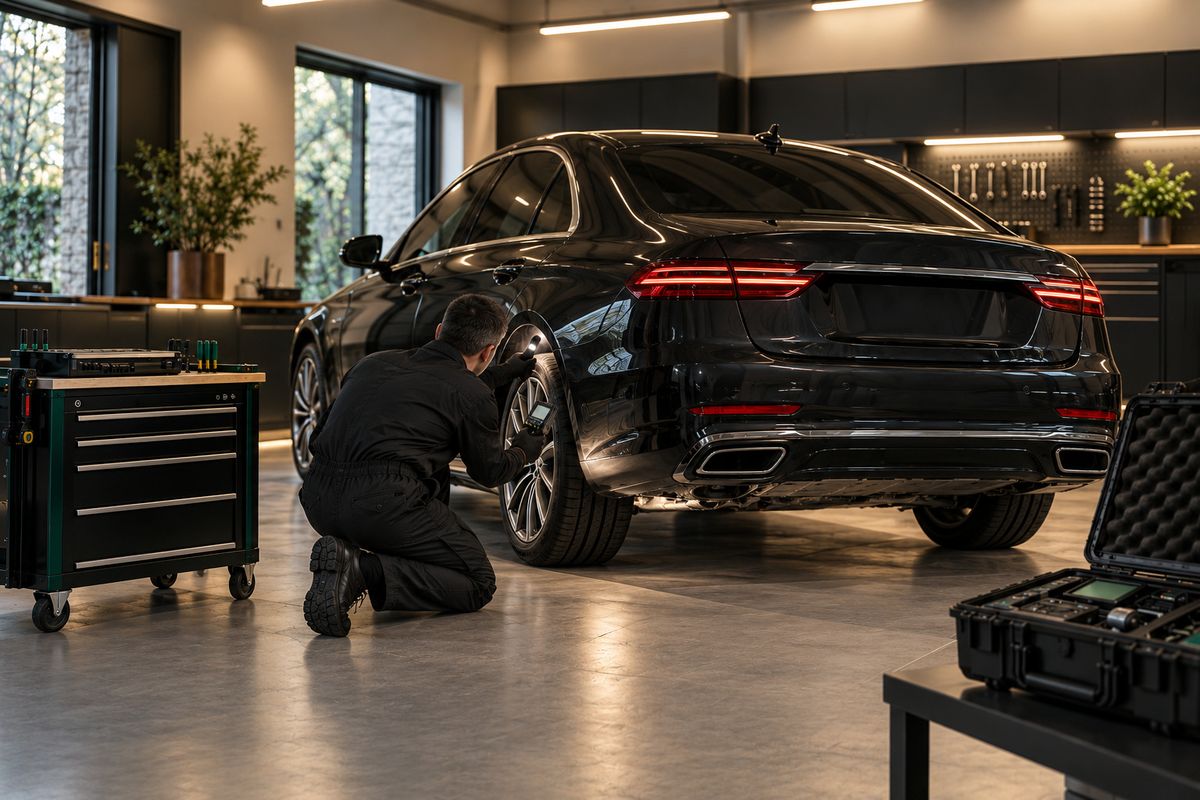
What we look for on a vehicle
Magnetic GPS trackers
Battery-powered units in a magnetic case, fitted in seconds to wheel arches, bumpers, the chassis or the spare-wheel well.
Hard-wired trackers
Trackers wired into the vehicle's power supply or loom, or plugged into the OBD diagnostic port, that never need charging.
In-car audio devices
Microphones and cellular bugs hidden in the cabin: under seats, in the headliner, in the dashboard or in a charger.
Cellular & logging units
Trackers that only report periodically, or store location data for later collection, so they do not show up on a quick scan.
Bluetooth item trackers
Small Bluetooth tags hidden in the boot, under trim or in the cabin, which report their location through nearby phones.
Signs of tampering
Disturbed trim, new cabling, fresh tool marks or out-of-place fixings that show where a device was fitted or removed.
What a vehicle check covers
- Wheel arches, bumpers, chassis rails and the underside, with access from below where possible
- Engine bay, boot, spare-wheel well and battery area
- OBD port, fuse boxes and accessible wiring looms
- The cabin: seats, headliner, dashboard, door cards, consoles and chargers
- Radio-frequency and cellular emissions from the vehicle, parked and with the ignition on
- Other vehicles used by the principal or the household, on request
Every sweep layers RF spectrum analysis (10 kHz–24 GHz), non-linear junction detection, thermal imaging, telephone and line testing, Wi-Fi and lens detection, and a physical search. See our method for how each technique works.
How a vehicle check works
Do not discuss the concern in the car or on a phone paired with it. Contact us from elsewhere and we arrange the check confidentially.
The check is carried out at a private garage, residence or secure car park, where the vehicle can be inspected without attention.
A hands-on search of the exterior, underside, engine bay and cabin, combined with RF, cellular and non-linear junction detection.
A tracker is photographed and documented in place, not simply removed. Removing it alerts whoever fitted it and can destroy evidence.
A written report and advice on next steps, including evidence handling and checks of other vehicles and premises.
Found a tracker? Leave it where it is. Taking it off tells whoever fitted it that you know, and can destroy the evidence needed to identify them. Photograph it without touching it, and read what to do if you find a device.
Who carries out the work
Our technical leadership includes Mike Moran, whose biography describes more than 25 years of intelligence, surveillance and counter-surveillance experience, and Paul Chauveau, an REI and cellular systems specialist. Read their professional backgrounds. The proposed inspection team, relevant qualifications and scope are confirmed for each assignment.

Timing, duration and cost
A single car usually takes one to two hours. Because the team is booked by the day, vehicle checks are commonly combined with a residence or office sweep, or with several vehicles in a household or fleet.
Travel and expenses are charged in addition, and every engagement is confirmed with a fixed written quotation. For what drives the price, read how much a bug sweep costs.
Frequently asked questions
Where are GPS trackers usually hidden on a car?
Most are magnetic units in the wheel arches, behind the bumpers, on the chassis rails or in the spare-wheel well. Others are wired into the vehicle's power supply, plugged into the OBD port or hidden inside the cabin.
Can a tracker be found with an app or a cheap detector?
Not reliably. Many trackers report only every few minutes or hours, or store their location data without transmitting, so a quick RF scan can miss them. A professional check combines electronic detection with a physical search.
Should I remove a tracker if I find one?
No. Removing it alerts whoever placed it and can destroy evidence. Photograph it in place without touching it, avoid discussing it in the vehicle, and get professional advice before anything is done.
Is it illegal to put a tracker on someone's car?
In most European countries, covertly tracking another person's vehicle without a lawful basis is illegal and can breach privacy, data-protection or harassment laws. The rules vary by country, so take legal advice about any device that is found.
How long does a vehicle check take?
One to two hours for a typical car. Several vehicles can be checked in a single team-day, and vehicle checks are often combined with a premises sweep.
Can a Bluetooth tag be used to track a car?
Yes. Small Bluetooth item trackers are increasingly hidden in vehicles because they are cheap and report their location through nearby phones. Some phones warn about unknown tags, but not reliably, so they are part of every vehicle check.
Confidential Consultation
NDA on request. Answered personally — no call centres.