
Consider a TSCM inspection when sensitive information, changes in access or a specific concern justify examining a room, property or vehicle. An acquisition, legal meeting or unexplained incident can prompt a discussion, but none is evidence that surveillance is present.
The eight situations below are planning prompts, rather than a mandatory schedule or a claim about how often companies commission sweeps. A useful decision combines the information at stake, the access history and the practical inspection window.
Eight situations to review
| Situation | Planning question | Possible scope |
|---|---|---|
| M&A, fundraising or negotiations | Where will confidential positions be discussed? | Deal rooms, boardrooms and executive offices |
| Litigation or arbitration | Which spaces will advisers and clients use? | Agreed meeting spaces, with reporting needs discussed in advance |
| A senior departure | Have keys, permissions or equipment arrangements changed? | Relevant offices and sensitive shared rooms |
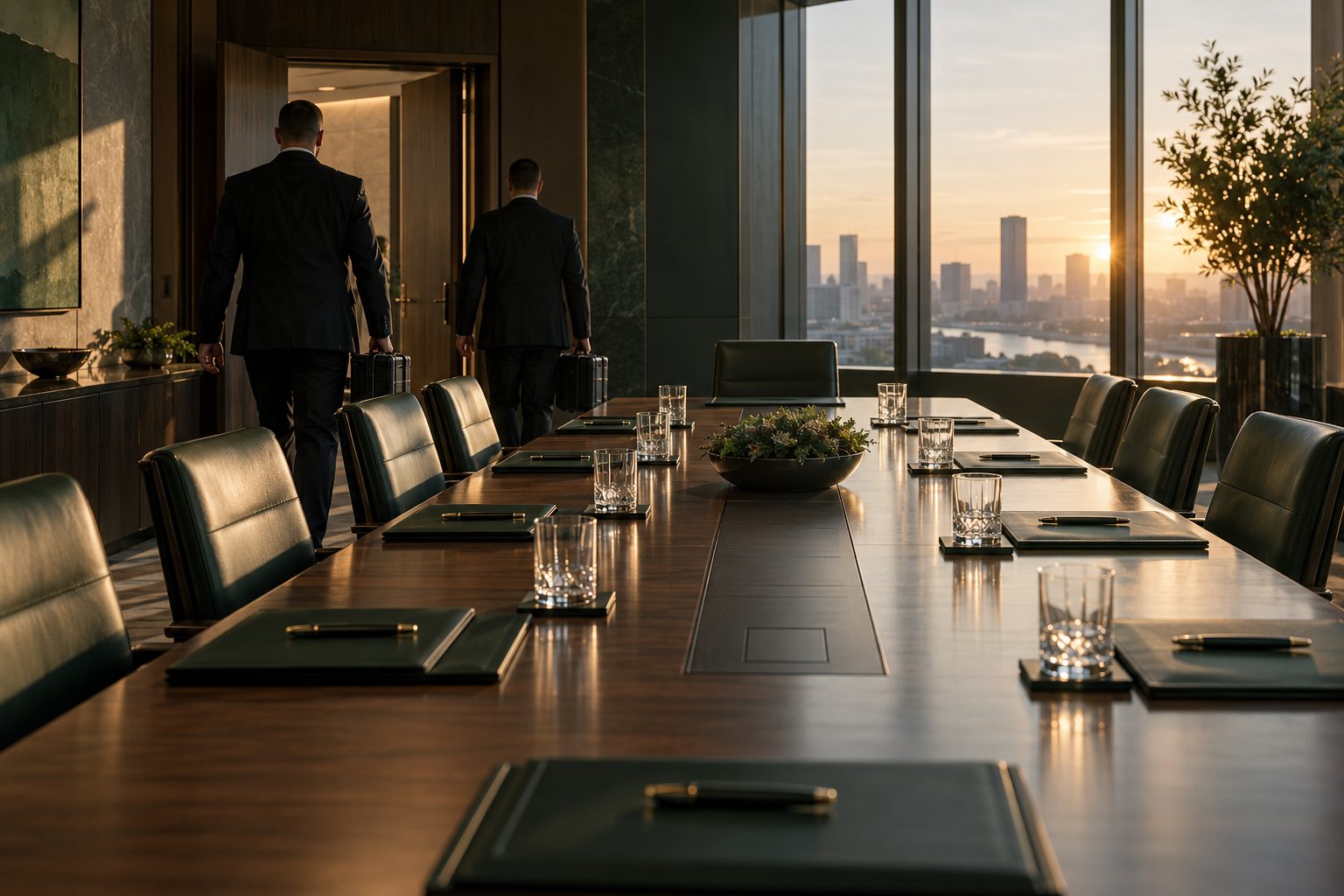
| Results or board decisions | Can the room be controlled before and after use? | Boardroom and associated preparation areas |
| Delegations, roadshows or offsites | When will the actual rooms be allocated? | Hotel suites, meeting rooms and transport |
| Family or succession disputes | Is there a specific concern and authority to inspect? | Agreed residences, studies or vehicles |
| Fit-outs, moves or renovations | Who has had access, and when will installation finish? | The premises after final works and before sensitive use |
| Unexplained entry or suspected tampering | Is immediate safety or evidence preservation involved? | The affected area, coordinated with the incident response |
For a deal room or executive office, our office and boardroom TSCM service sets out the access questions. A concern involving staff behaviour or information loss may also require a separately scoped corporate investigation.
Use access control alongside inspection
NPSA’s protective-security guidance treats technical security and access controls as parts of a wider protective approach. Our practical application is to plan the inspection and the room’s handover together.
Record when furniture, conferencing systems and other fixtures will be installed. Identify who can release the room, who may enter afterwards and what happens if a contractor returns. If room allocation changes, update the brief rather than assuming the original inspection covers the replacement.
An inspection is a time-specific examination. Later alterations or uncontrolled entry can change the conditions that were examined. The handover record matters alongside the inspection report.
There is no universal quarterly rule
A recurring corporate TSCM programme can combine planned visits with event-driven inspections. The interval should follow the organisation’s exposure, use of the premises, access arrangements and incident history.
Quarterly, monthly and pre-event visits are possible planning choices, not a standard that every organisation must meet. Agree the review triggers and responsibilities in writing. See our pricing and quotation guide for the factors affecting the proposal.
When a concern becomes an incident
Information reaching an unexpected recipient can have several causes. Record the facts without accusing an employee, contractor or counterparty. If a suspected device has been found, follow the discovery guidance; immediate safety and any police response take priority over booking a commercial inspection.
Frequently asked questions
Should we inspect before every board meeting?
Decide through a documented assessment of the information, premises and access. Agree a programme when recurring inspections are justified.
When should the inspection take place?
Plan it after final setup and before sensitive use, with sufficient time for the agreed scope. Control subsequent access and record changes.
Does a contentious departure prove a surveillance risk?
No. It is a reason to review access, assets and any specific concerns. It does not establish wrongdoing or justify assumptions about an individual.
Plan the next step
Discuss a meeting or programme, giving the space, event date, final setup time and access authority. Availability and deployment from London are confirmed for each assignment.
Sources and editorial notes
- NPSA: protective security considerations — background on combining physical, personnel and technical protection.
- TSCM Institute: procurement advice — context on commissioning a defined inspection.
The eight triggers and proposed planning questions are Bureau Securitas editorial recommendations. Sources reviewed 26 October 2026.