
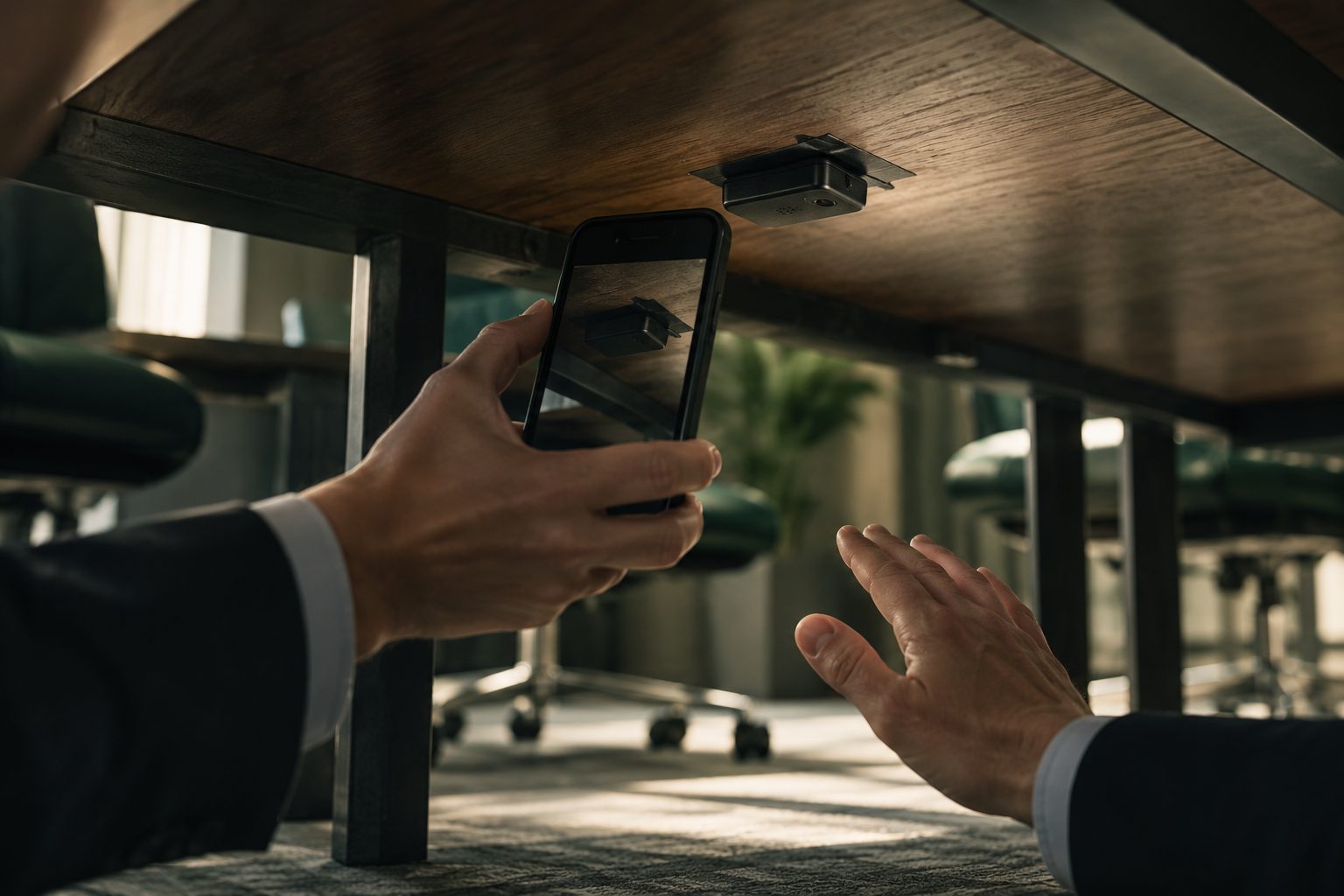
If you discover a suspected listening device, hidden camera or tracker, put personal safety first. Leave an unsafe situation and contact local police or emergency services when there is immediate danger. Do not confront a suspected perpetrator or continue an unsafe journey to preserve evidence.
For a concern without immediate danger, avoid unnecessary handling. Contact your organisation’s security lead, an appropriate specialist or legal adviser from a separate trusted location and device. An unfamiliar object needs identification before anyone concludes that surveillance has occurred.
Record what is available safely
If safe, note the time, location, appearance and circumstances of discovery. Keep relevant photographs, alert screenshots and access records. Do not take risks to obtain a better photograph, crawl under a vehicle or open an electrical fitting.
NIST’s forensic incident-response guidance addresses preservation, documentation and chain of custody. Those principles help frame an evidence plan; the publication concerns digital forensics and is not a step-by-step guide for recovering every physical device.
Ask who will document, recover, hold and examine the item, and how each transfer will be recorded. A specialist may need to coordinate with police, the property controller or legal advisers. The correct containment action depends on the circumstances: leaving every device powered, or unplugging every device immediately, is not a universal rule.
If the concern is a vehicle tracker
Do not assume that an unfamiliar vehicle unit is illicit. Fleet, insurance and manufacturer equipment can have legitimate purposes. Equally, an unwanted-tracking alert deserves attention rather than dismissal.
Apple’s unwanted-tracking guidance and Google’s Android guidance explain how supported alerts can help locate and identify compatible Bluetooth trackers. Follow the manufacturer’s current instructions and seek police assistance if safety is at risk. These alerts do not cover every cellular, wired or recording device.
Avoid taking a suspected tracker to a confidential destination while deciding what to do. Seek a safe place and an appropriate response; do not keep following your normal routine solely to avoid alerting someone. Our vehicle inspection service can be discussed after urgent safety needs are addressed.
Involve the right people
For an office, notify the authorised security or incident-response contact through an appropriate channel. Preserve relevant access and maintenance records without circulating allegations. A possible staff or contractor issue may require a separate corporate investigation, with responsibilities defined before enquiries begin.
If digital material needs examination, digital forensic support should be scoped separately. A physical sweep does not automatically include extracting data from a phone, SIM, recorder or network.
Police reporting, employment matters and evidence requirements depend on the facts and jurisdiction. A commercial inspection is not a prerequisite for seeking police help, and it should not delay an urgent report.
What to expect from a scoped inspection
Agree the premises and equipment to be examined, access authority, methods, restrictions and intended reporting purpose. The assignment may involve identifying an object, examining a defined area or recommending further enquiries.
The report should distinguish observations from conclusions and record limitations. Finding one object does not prove who installed it, whether it operated or whether other devices exist. A report’s use in legal proceedings depends on the relevant process; admissibility is not guaranteed by purchasing an inspection.
Frequently asked questions
Should I remove the device myself?
Prioritise safety and appropriate instructions. Avoid unnecessary handling or dismantling; electrical, evidence and personal-safety considerations may require different responses.
Who should I call first?
Police or emergency services if there is immediate danger. Otherwise, use a trusted channel to contact the relevant security lead, specialist and legal adviser as appropriate.
Does a tracker alert prove someone is stalking me?
It is a reason to assess the situation and follow the manufacturer’s safety guidance. Alerts can have benign explanations and cannot identify every kind of tracking device.
Will a TSCM report be accepted in court?
That cannot be promised. Discuss the intended use, evidence handling and reporting with the relevant advisers before work begins.
Discuss specialist support
After urgent safety and reporting needs are addressed, contact Bureau Securitas from an appropriate separate location or device. Explain what was observed, where the item is and who controls access. We will discuss a suitable scope before work is agreed.
Sources and editorial notes
- NIST SP 800-86: forensic techniques in incident response — documentation and evidence planning.
- Apple: unwanted-tracking alerts — supported devices and safety response.
- Google: find unknown trackers — Android alerts and next steps.
This is general editorial guidance. Local safety, police and legal advice take priority. Sources reviewed 26 October 2026.