
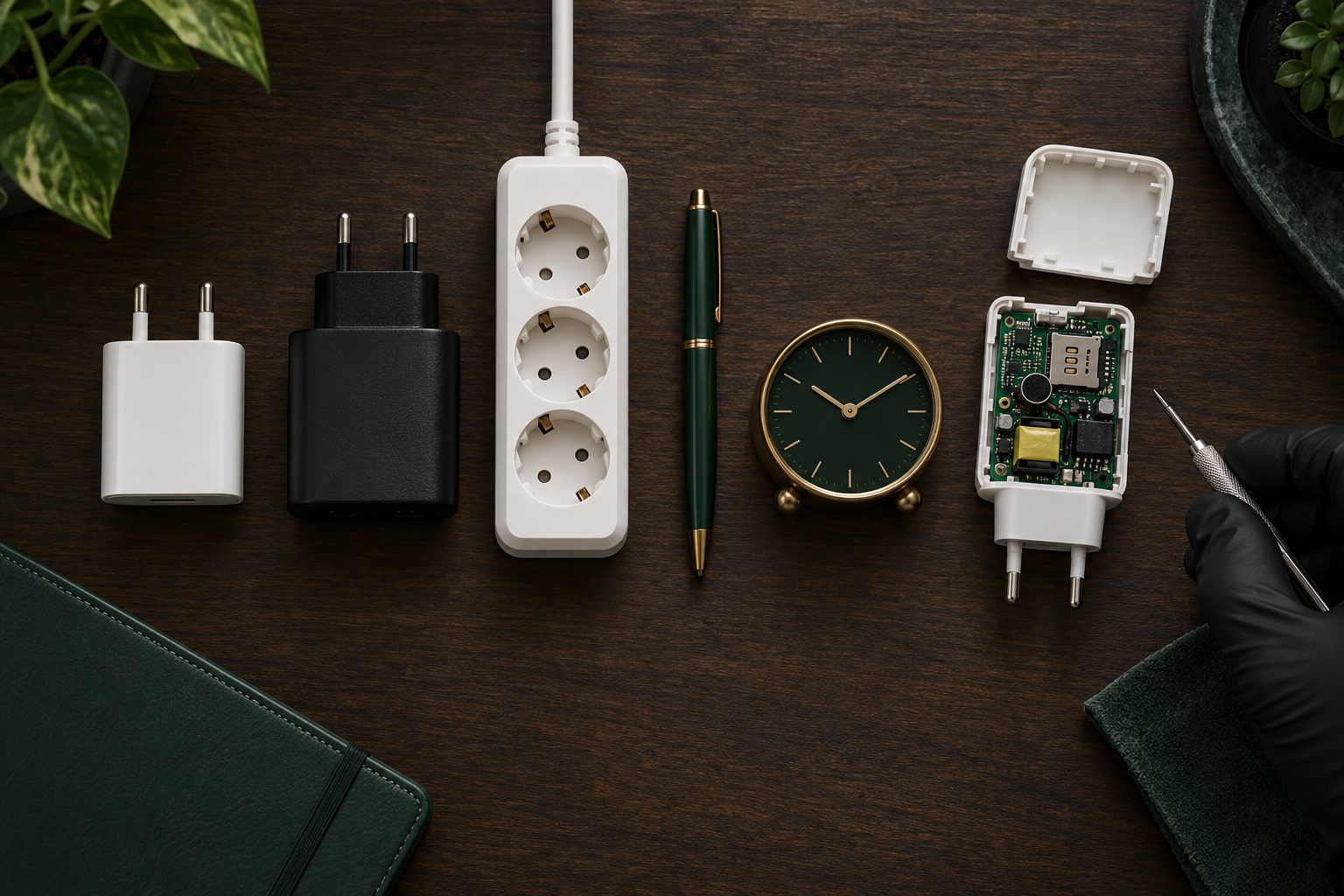
A covert listening device is a hidden microphone that either transmits what it hears or records it for later collection. In 2026, most listening devices do not look like "bugs" at all: they are built into ordinary objects such as USB chargers, power adapters, extension leads, smoke detectors, pens and desk equipment, or they are small bare circuit boards hidden inside furniture, fittings and electronics.
That is why they are hard to spot by eye. This guide explains the main types of listening device, what each looks like, where they are usually hidden, and how they are found.
Key facts
- Size: a complete audio device with microphone, battery and SIM can be smaller than a matchbox
- Most common disguises: chargers, adapters, power strips, docking stations, smoke detectors, clocks and pens
- Most common type in corporate cases: devices that send audio over the mobile network (GSM/4G bugs) or record locally
- Hardest to detect: recorders and devices that only transmit when called, because they are silent most of the time
- Most reliable way to find them: a professional sweep that combines RF analysis, non-linear junction detection and a physical search
The main types of listening device
1. GSM and 4G bugs
These contain a SIM card and work like a stripped-down mobile phone. The person who planted the device calls it, or it calls them, and they listen live from anywhere. Many stay silent until called, or switch on when they detect sound, so they transmit only for short periods. They are the most common device in corporate and private cases because they are cheap and have unlimited range.
What they look like: usually a disguised everyday item, often something that is plugged in, so the battery never runs out. Inside, a small circuit board with a SIM slot and a pin-hole microphone.
2. Voice-activated recorders
These do not transmit at all. They record to internal memory, and someone with access collects the device later or swaps it. Because they emit no radio signal, an RF detector cannot find them.
What they look like: pens, USB sticks, key fobs, car key cases, or a bare recorder taped under a table or inside a cavity.
3. RF transmitters
The classic "bug": a tiny radio transmitter that broadcasts audio to a receiver nearby, typically within a few hundred metres. They are less common in professional cases today, but still found, especially where the listener has a nearby location such as a car, an adjoining office or a hotel room next door.
What they look like: a small circuit board with a short wire aerial, often inside wall sockets, light switches, lamps or furniture.
4. Wi-Fi and Bluetooth devices
Devices that send audio over a local wireless network, or connect to a phone nearby. Some piggyback on the building's Wi-Fi; others create their own hidden network.
What they look like: smart plugs, speakers, picture frames, alarm clocks, or USB devices plugged into a TV, screen or docking station.
5. Wired and hard-wired devices
Microphones wired into the building's cabling, telephone lines or AV systems, sometimes installed during building works. They need no battery and can stay in place for years.
What they look like: often nothing, because they are inside walls, ceilings, floor boxes and conference equipment.
6. Compromised equipment you already own
Conference phones, video-conferencing systems, smart speakers and desk phones can be altered or configured to pass audio out of the room, so no extra device is needed.
Where listening devices are usually hidden
Devices go where they will not be noticed, where they will hear clearly, and where they can be powered. In offices and homes, the usual places are:
- Power points: chargers, adapters, extension leads and anything left plugged in
- Desk and AV equipment: docking stations, monitors, TVs, conference phones and the USB ports behind screens
- Ceilings and floors: ceiling tiles, light fittings, smoke detectors, floor boxes and cable trays
- Furniture: the underside of tables, inside chairs, credenzas and sofas
- Decorative items: clocks, picture frames, plants, lamps and gifts
- Vehicles: under seats, in the headliner, behind the dashboard and in chargers
A real example: in October 2026, US prosecutors charged an engineer with hiding a covert audio recorder in the USB port on the back of a TV in a company's executive conference room (our summary of the case). Our "Anatomy of a find" case studies show the same pattern, with devices built into a laptop docking station and a USB charger.
Signs that a room may have a listening device
There is rarely an obvious sign, but these should prompt a closer look:
- Confidential information turning up with people who should not have it
- New or unfamiliar chargers, adapters, power strips or gadgets nobody remembers buying
- Ceiling tiles, socket plates or furniture that have been moved or show fresh marks
- Unexpected "gifts" for the office or home, especially electronics
- Unexplained visits by contractors, cleaners or technicians
- A break-in where nothing was taken
For the full list, read 12 signs your office or boardroom may be bugged.
How listening devices are found
What you can do yourself
You can carry out a simple visual check: look for unfamiliar items plugged into sockets, examine anything that has recently arrived, and check whether ceiling tiles, vents or socket plates have been disturbed. Do this calmly and without dismantling anything.
What you should not do is discuss your suspicion inside the room, search noisily, or remove anything you find. That alerts whoever placed the device and can destroy evidence. Contact a specialist from a phone and location outside the space. If you have already found something, read what to do if you find a listening device.
Why detectors and apps miss most devices
A handheld RF detector or a phone app finds only a device that happens to be transmitting at that moment. Recorders transmit nothing, GSM bugs are silent until called, and a busy office is full of legitimate Wi-Fi and mobile signals. We explain this in detail in do bug detectors work?.
What a professional sweep uses
A professional TSCM sweep layers several techniques so that no single disguise defeats it:
- RF spectrum analysis from 10 kHz to 24 GHz, including cellular bands, to find transmitting devices and short bursts
- Non-linear junction detection (NLJD), which finds electronics whether they are on, off or recording
- Thermal imaging, which shows heat from hidden electronics inside walls, furniture and fittings
- Telephone and line testing of phones, cabling and network points
- Wi-Fi, Bluetooth and lens detection for wireless devices and hidden cameras
- A methodical physical search, including opening and comparing suspect items against known-good ones
Who uses listening devices, and against whom
Devices are placed by competitors, counterparties in disputes, people involved in family or matrimonial conflicts, investigators acting outside the law, and, in high-value cases, state-linked actors. Most are placed by someone who has, or can get, physical access: a member of staff, a contractor, a visitor or a former insider. That is why the most targeted spaces are boardrooms and executive offices, hotel suites, private homes and vehicles.
When to bring in a professional
A professional sweep is worth commissioning when the stakes are high or a leak is suspected: before transactions and board meetings, during litigation or disputes, after building works or staff changes, and when hosting sensitive visitors. For planned work in Europe, a sweep typically costs €2,500–5,000 per team-day plus travel, and you receive a fixed written quotation before any commitment. See how much a bug sweep costs.
Bureau Securitas carries out TSCM sweeps across London and every EU capital with two-person teams from UK military and government backgrounds. Contact us from a safe device at tscm@bureausecuritas.com. NDA on request.
Frequently asked questions
What does a listening device look like?
Most modern listening devices look like ordinary objects: USB chargers, power adapters, extension leads, smoke detectors, clocks, pens or desk equipment. Others are small bare circuit boards with a pin-hole microphone, hidden inside furniture, fittings or electronics. Very few look like a traditional "bug".
Where are listening devices usually hidden?
In power points and anything plugged in, in desk and AV equipment such as docking stations and the USB ports behind TVs, in ceilings, smoke detectors and floor boxes, under tables and inside furniture, and in decorative items and gifts.
How can I find a listening device myself?
You can do a calm visual check for unfamiliar plugged-in items, recently arrived objects and disturbed ceiling tiles or socket plates. Do not discuss your suspicion in the room or remove anything. Reliable detection needs professional equipment, because recorders and call-activated devices are silent most of the time.
What is a GSM bug?
A GSM bug is a listening device with a SIM card that sends audio over the mobile network. The person who placed it calls the device, or it calls them, so they can listen live from anywhere. Many stay silent until called, which makes them hard to detect with simple RF detectors.
Can a bug detector app find a listening device?
Not reliably. Phone apps and cheap detectors can only pick up some devices while they are transmitting. They miss recorders, devices that are switched off or waiting to be called, and they struggle in places full of Wi-Fi and mobile signals.
Is it legal to plant a listening device?
In most European countries, secretly recording or intercepting other people's private conversations without a lawful basis is a criminal offence. The rules differ by country, so take legal advice about any device you find.