
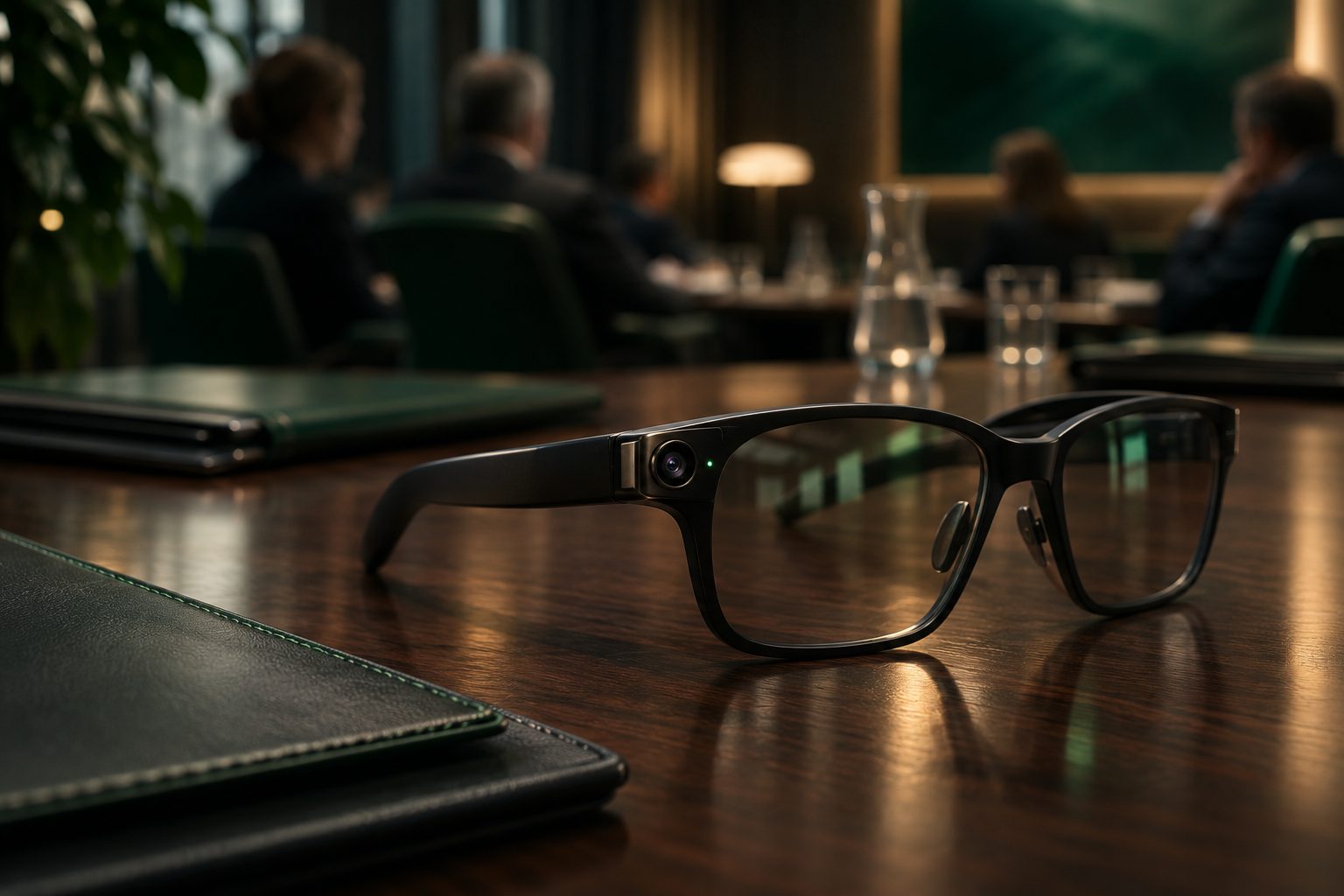
Camera-equipped smart glasses are being restricted in courts, schools, public facilities and secure sites across Europe, North America and Australia, and data-protection regulators are starting to investigate them. As Biometric Update reported in October 2026, the restrictions now cover courts in England and Wales and several US federal courts, public schools in Western Australia, some council facilities in Australia, and secure zones of the Canadian armed forces.
For any organisation that holds confidential meetings, the question is simple: can someone record your boardroom just by wearing their glasses?
What has changed in 2026
According to the report:
- Courts: courts and tribunals in England and Wales have barred Meta glasses. In the US, New York State courts and several federal districts prohibit or restrict smart glasses in their buildings, in some cases including prescription models.
- Secure sites: Canada's Department of National Defence prohibits AI glasses in all operations, security and high-security zones, even when switched off. The US Air Force has barred wearing smart glasses with photo, video or AI features in uniform.
- Regulators: the Netherlands data-protection authority urged employers to prohibit camera glasses where appropriate. France's CNIL launched a smart-glasses initiative, Luxembourg's regulator issued guidance, and the European Data Protection Board is examining the devices. G7 privacy authorities added smart glasses to their 2026 action plan.
- Australia: the privacy commissioner opened a formal investigation into a smart-glasses app developer, Western Australia banned smart glasses in public schools, Sydney's Inner West Council resolved to ban them in pools, changing rooms, childcare centres and public toilets, and Brisbane banned non-consensual use of camera devices at its public pools.
Meta's glasses show a small light when they record, and on its second-generation models covering the light disables the camera. That helps, but a small light is easy to miss across a meeting table, and not every product on the market has one.
Why this matters in meetings
Smart glasses look like ordinary glasses. A participant, visitor, contractor or adviser can record audio, photos or video of a meeting, a whiteboard or a screen without taking out a phone. Unlike a planted device, they arrive and leave with the person, so a technical sweep of the room before the meeting will not find them.
That makes them a policy problem as much as a technical one. The organisations above did not try to detect glasses; they set a rule.
What boards and executives should do
- Set a rule for sensitive meetings. For board meetings, deal discussions and other confidential sessions, ask attendees to leave recording-capable glasses, watches and phones outside, in the same way many organisations already handle phones.
- Say it in advance. Put the rule in the meeting invitation and the visitor policy, so it is not a surprise at the door. Allow for prescription needs: people can switch to non-smart glasses or confirm the device is off and stored.
- Include visitors and advisers. External parties, contractors and caterers are the people you know least.
- Combine with room checks. A rule covers what people bring in. A boardroom sweep covers what was placed in the room beforehand. You need both.
- Remember hotels and travel. Meetings in hotel suites and rented rooms are harder to control. See hotel suite sweeps.
For other everyday recording devices, see our guides to hidden voice recorders and spy pens and what listening devices look like.
How Bureau Securitas can help
Bureau Securitas carries out TSCM sweeps of boardrooms, executive offices, hotel suites and vehicles across London and every EU capital, and advises on practical meeting-security rules. Planned sweeps typically cost €2,500–5,000 per team-day plus travel, with a fixed written quotation first.
Contact us from a safe device at tscm@bureausecuritas.com. NDA on request.
*Source: Biometric Update, October 2026.*
Frequently asked questions
Where are smart glasses being banned?
According to Biometric Update in October 2026, restrictions now cover courts in England and Wales and several US federal districts, New York State courts, public schools in Western Australia, some council facilities in Australia, and secure zones of the Canadian armed forces.
Can smart glasses record a meeting without anyone noticing?
They can record audio, photos and video while looking like ordinary glasses. Many models have a recording light, but it is small and easy to miss across a meeting table, and not every product has one.
Will a bug sweep detect smart glasses?
Not reliably, because the glasses arrive and leave with the person. A sweep finds devices placed in the room. Glasses are best handled with a clear rule that recording-capable devices stay outside sensitive meetings.
What should a company's smart glasses policy say?
For confidential meetings, ask attendees, visitors and advisers to leave recording-capable glasses, watches and phones outside, state the rule in the invitation, and allow people who need prescription lenses to switch to non-smart glasses.