
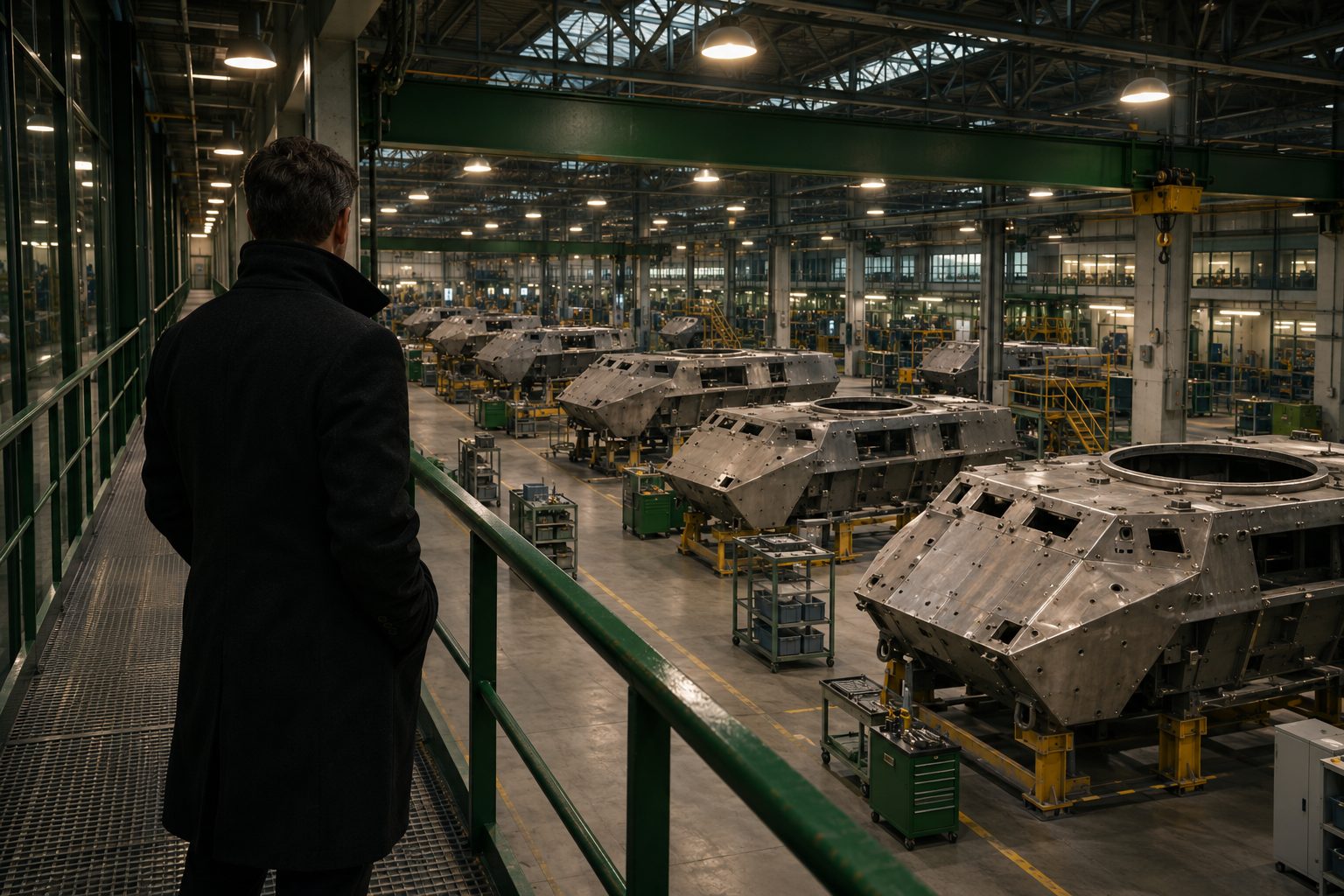
On 22 October 2026, Germany's Federal Public Prosecutor announced the arrest in Brandenburg of a man suspected of spying for Russian intelligence on Europe's defence industry. As reported by Euronews, prosecutors say the suspect, a Ukrainian national identified as Vadym Y., had been in contact with a Russian intelligence service through an intermediary since at least July 2025.
According to prosecutors, he gathered information on the production of armoured vehicles, ammunition and explosives, and on personnel and military facilities at sites used to secure NATO's eastern flank. Some of the information was publicly available. Other details, prosecutors say, he deliberately obtained by approaching people working in the European defence industry. The investigation is ongoing, and he is presumed innocent until proven guilty.
A pattern, not a one-off
Euronews places the arrest alongside other German cases this year, including an arrest in Berlin in April of a man accused of passing information on military support for Ukraine, defence companies and military convoys to Russian intelligence. German security authorities have issued increasingly stark warnings about Russian espionage and sabotage. In the UK, MI5's Director General said in October that its state-threat caseload has quadrupled in a decade (our summary).
What it means for defence suppliers and their executives
People are the way in
The detail that stands out is the method: approaching people who work in the industry. Information is gathered through conversations, contacts, social media, trade events and relationships, as well as through devices. Staff who know what is being produced, where and in what volumes are valuable targets, whether or not they realise it.
Information leaks from many places
Production volumes, delivery schedules, site layouts and staff details can be pieced together from public sources, casual conversations, contractors and visitors. Each piece looks harmless on its own.
Meetings and travel are exposed
Executives and engineers discuss contracts, capacity and customers in meeting rooms, hotels and vehicles, often while travelling to trade fairs, customers and suppliers. Those are exactly the places where conversations can be overheard or recorded.
Practical steps
- Brief staff on approaches. Make sure people know that unusual interest in their work, from new contacts, online profiles or at events, should be reported, without fear of blame.
- Limit what is said, where. Keep production, customer and delivery details out of public settings and unsecured calls.
- Protect the rooms that matter. Sweep boardrooms and engineering meeting rooms before sensitive programme and contract discussions, and on a schedule. See office and boardroom sweeps.
- Protect travel. Have executives' hotel suites, meeting rooms and vehicles checked on sensitive trips. See hotel suite sweeps and vehicle tracker checks.
- Treat it as a programme. A recurring TSCM programme combined with staff awareness gives a documented record of the steps taken.
For more on how insiders and contacts are used, see the insider threat.
How Bureau Securitas can help
Bureau Securitas provides technical surveillance countermeasures for corporates, including defence and industrial companies, across London and every EU capital. Our two-person teams come from UK military and government backgrounds. Planned sweeps typically cost €2,500–5,000 per team-day plus travel.
Contact us from a safe device at tscm@bureausecuritas.com. NDA on request.
*Source: Euronews, 22 October 2026; see also Al Jazeera, 22 October 2026.*
Frequently asked questions
Who was arrested in Germany for spying on the defence industry?
On 22 October 2026, German federal prosecutors announced the arrest in Brandenburg of a Ukrainian national identified as Vadym Y., suspected of gathering information for Russian intelligence on armoured vehicle, ammunition and explosives production and on NATO eastern-flank sites. He is presumed innocent.
How did he allegedly gather information?
According to prosecutors, some of the information was publicly available, and other details were deliberately obtained by approaching people working in the European defence industry.
Why are defence suppliers targeted?
Production volumes, delivery schedules, site details and customer information are valuable to foreign intelligence services, especially those linked to the war in Ukraine. Staff, executives and their meetings are routes to that information.
How can defence companies protect themselves?
Brief staff on unusual approaches, limit sensitive discussion in public and on unsecured calls, sweep meeting rooms before sensitive discussions, protect executive travel, and run a regular counter-surveillance programme.