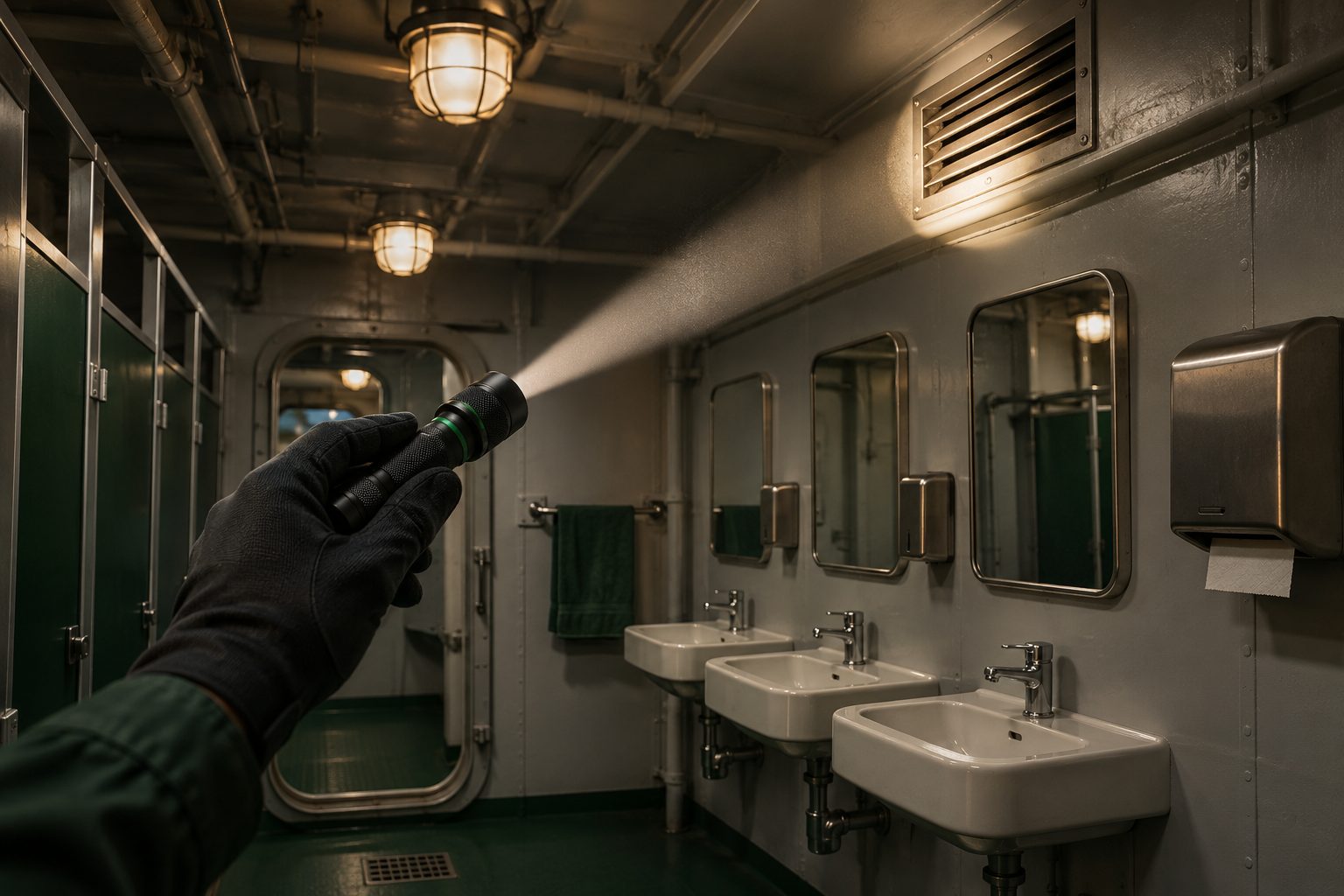
A hidden video recording device was found on 11 October 2026 in a bathroom used by female sailors on HMAS Leeuwin, a Royal Australian Navy survey ship berthed in Cairns. As reported by The Maritime Executive, the Joint Military Police Unit is investigating with civilian authorities, a person of interest has been identified, and the Navy began auditing bathrooms across its fleet.
The Chief of Navy, Vice Admiral Matt Buckley, called it "the most despicable betrayal of trust". According to later reports, the navy member under investigation was stood down, and a sweep of the navy's whole fleet found no other recording devices.
What organisations can learn from the response
This was a case of covert recording of people, not industrial espionage, and it is first a matter for the investigators and the people affected. But the way the Navy responded is a useful model for any organisation that finds a hidden device.
1. One find means checking everywhere
A device found in one place raises an immediate question: are there others? The Navy's answer was to audit the whole fleet. Organisations that find a device in one office, bathroom or meeting room should check comparable spaces across the site, not just the room where it was found.
2. The first questions are always the same
The obvious questions in any case like this are how long a device has been in place and who may have been recorded. Those questions can only be answered if the device is preserved as evidence and if the organisation knows when the space was last checked. A device removed in a hurry, or a room that has never been inspected, leaves those questions open. See what to do if you find a device.
3. Private spaces need protecting too
Bathrooms, changing rooms, cabins, staff accommodation and rest areas are where people most expect privacy. They also tend to be left out of security checks, which focus on boardrooms and offices. A credible inspection programme includes them, carried out respectfully and by appropriate staff.
4. Handle the information carefully
When the matter was raised in the Senate, the Chief of the Defence Force, Admiral Mark Hammond, said he would have preferred it to be brought to his attention first. Whoever finds a device should limit who is told while the investigation is under way.
What to do if you find a hidden camera at work
- Do not touch, unplug or remove it.
- Photograph it in place and note the time and location.
- Restrict access to the area and limit who is told.
- Involve the police and your lawyers, especially where people may have been recorded in private spaces.
- Check comparable spaces across your premises for further devices.
- Support the people affected.
For how cameras are hidden and how to look for them, see how to detect hidden cameras.
How Bureau Securitas can help
Bureau Securitas carries out discreet TSCM sweeps of offices, residences, vehicles, aircraft and yachts across London and every EU capital, including site-wide checks after a device has been found. Our teams combine lens detection, RF analysis, non-linear junction detection, thermal imaging and a physical search. Planned work typically costs €2,500–5,000 per team-day plus travel.
Contact us from a safe device at tscm@bureausecuritas.com. NDA on request.
*Sources: The Maritime Executive, 16 October 2026; Yahoo News Australia, 28 October 2026; AAP, 29 October 2026.*
Frequently asked questions
What was found on HMAS Leeuwin?
A hidden video recording device was found on 11 October 2026 in a bathroom used by female sailors on the Royal Australian Navy survey ship HMAS Leeuwin, while it was berthed in Cairns. Military police are investigating with civilian authorities.
What did the Navy do after the camera was found?
The Navy began auditing bathrooms across its fleet, a person of interest was identified and stood down pending the investigation, and later reports said a sweep of the whole fleet found no other devices.
What should a company do if it finds a hidden camera?
Leave it in place, photograph and document it, restrict access and limit who is told, involve the police and lawyers, check comparable spaces across the premises, and support the people affected.
Should private spaces be included in security checks?
Yes. Bathrooms, changing rooms, cabins and staff accommodation are where people most expect privacy and are often left out of checks. They should be included, carried out respectfully by appropriate staff.